Product & community case study
Yujian Reading Circle
A purpose-driven, role-agnostic reading community in Tokyo, built around shared interests and in-person conversation.
- Role
- Founder / Community Builder / Brand Designer / Operator
- Period
- 2022 – 2024
- Status
- Completed
- Stack
- Community Operations · Brand Design · Event Programming · Website
One-line summary
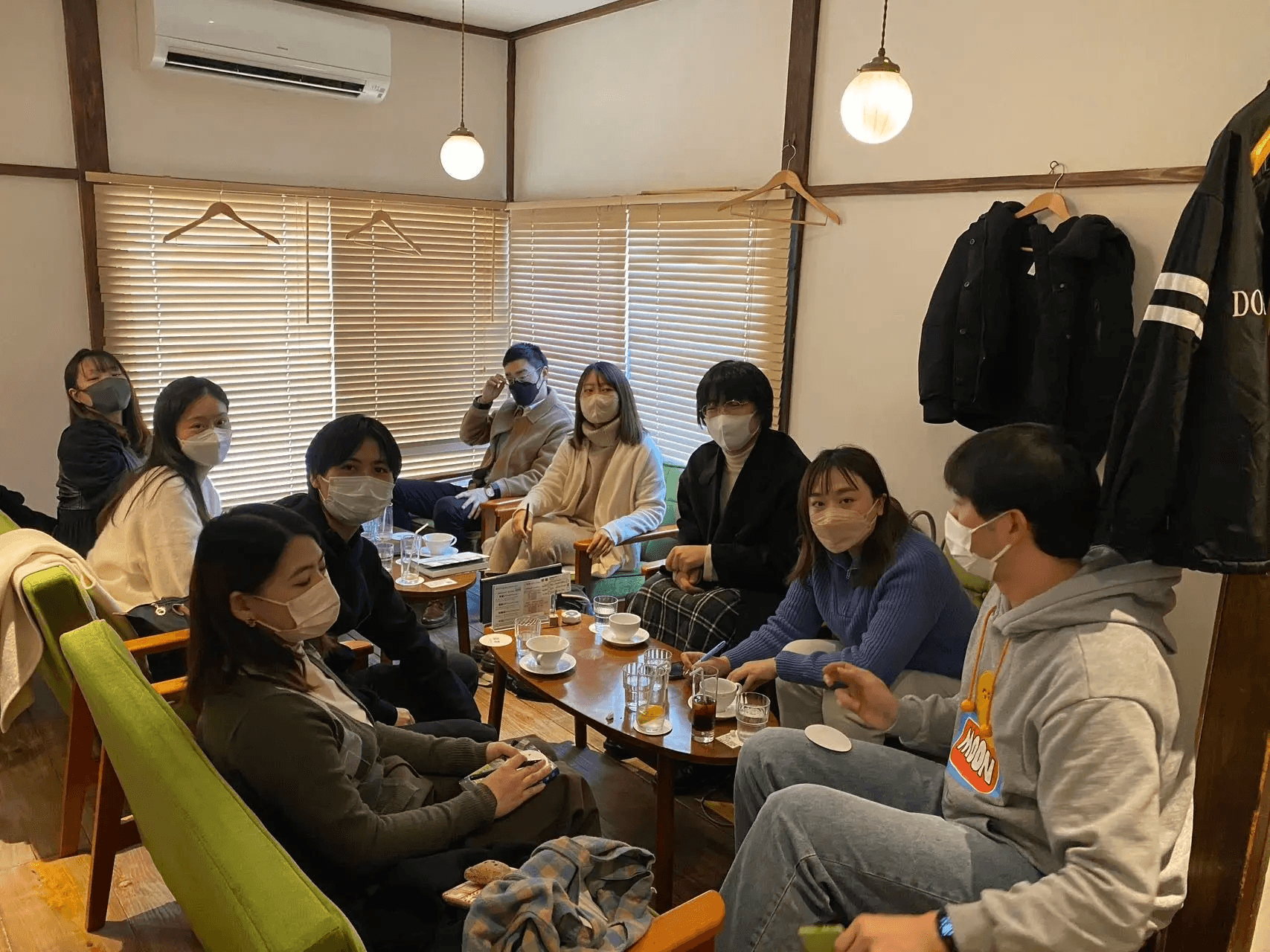
A Tokyo reading and salon community designed so that books, ideas and shared interests—not professional or social labels—could become the starting point of connection.
At a glance
- 01Problem
- Urban social connection often stays inside existing school, workplace, age or professional circles.
- 02Context
- A Tokyo-based reading circle and salon community developed between 2022 and 2024.
- 03My contribution
- Initiated and ran the full concept, operating model, visual identity, and community experience—from programming and guest coordination to hosting, communications and the website.
- 04Outcome
- A recognisable recurring community that expanded from books into cross-topic salons and helped lay groundwork for a wider cultural community beyond the founder's later direct involvement.
Evidence highlights
- 2022–2024
- active project period
- End-to-end
- founder ownership
- Offline
- community format
Reading circles and cross-topic salons in Tokyo
Concept, brand, programming, operations and website
Intimate, curated, recurring gatherings
Three-minute walkthrough
What Yujian was
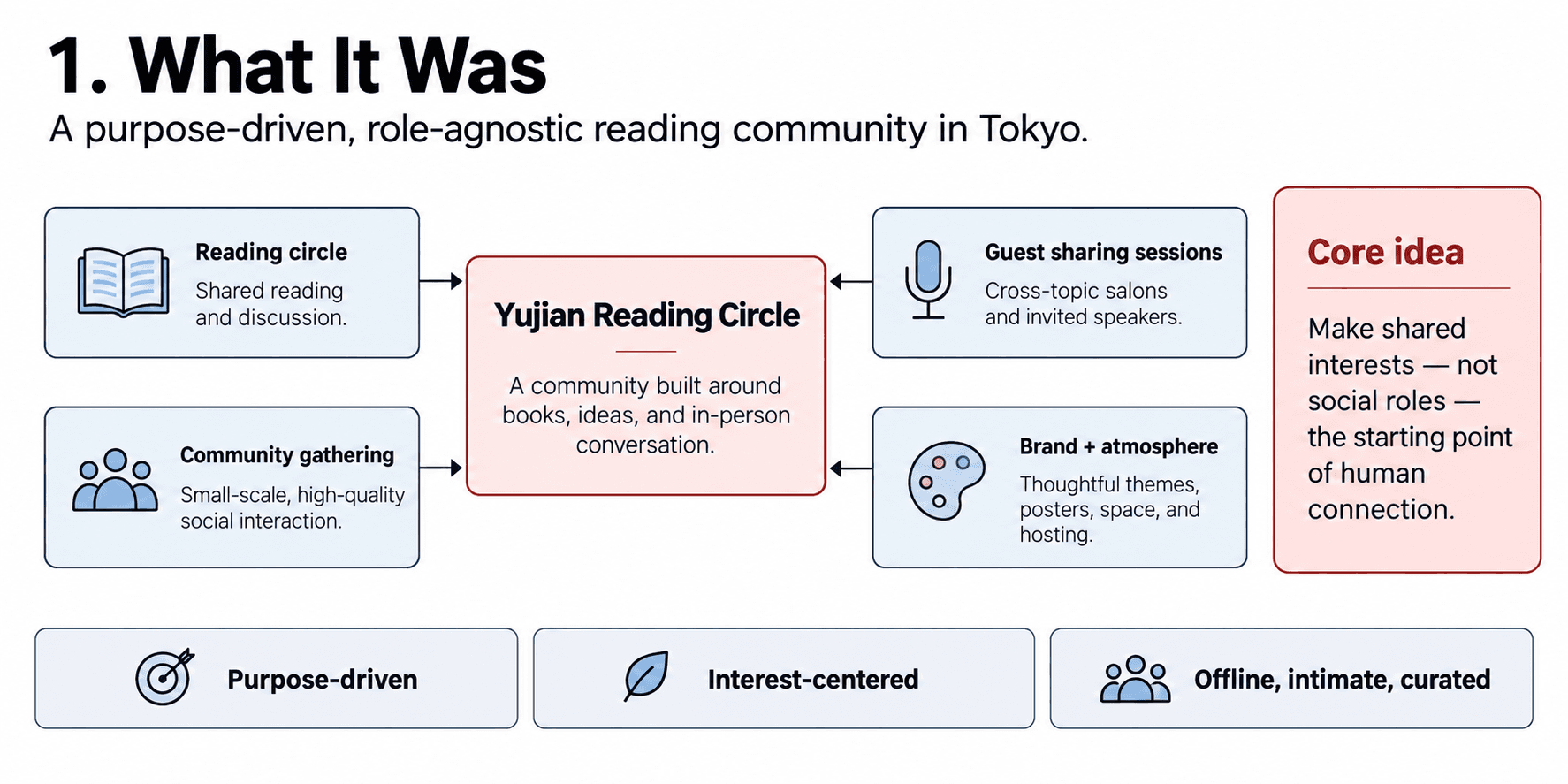
Yujian began with a simple belief: people should be able to meet through curiosity and shared interests rather than fixed roles such as student, office worker, researcher or creator. Reading provided the anchor, while small-group discussion, guest sharing, visual identity and atmosphere turned individual events into a recognisable community experience.
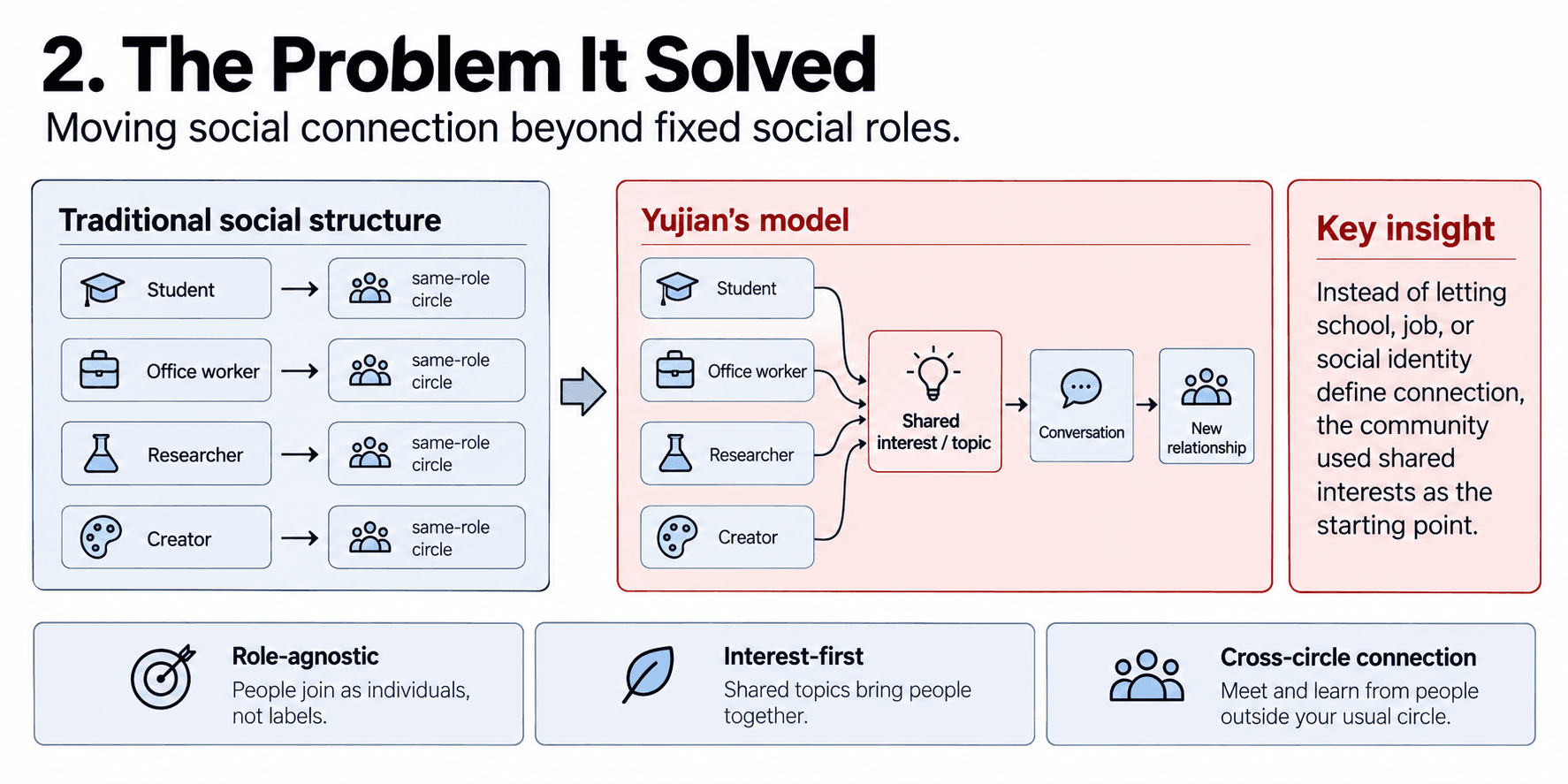
Moving connection beyond fixed social roles
In many urban settings, existing institutions determine who meets whom. Yujian inverted that structure: a shared topic brought people from different backgrounds into the same conversation, allowing new relationships to form without asking participants to enter under a professional identity.
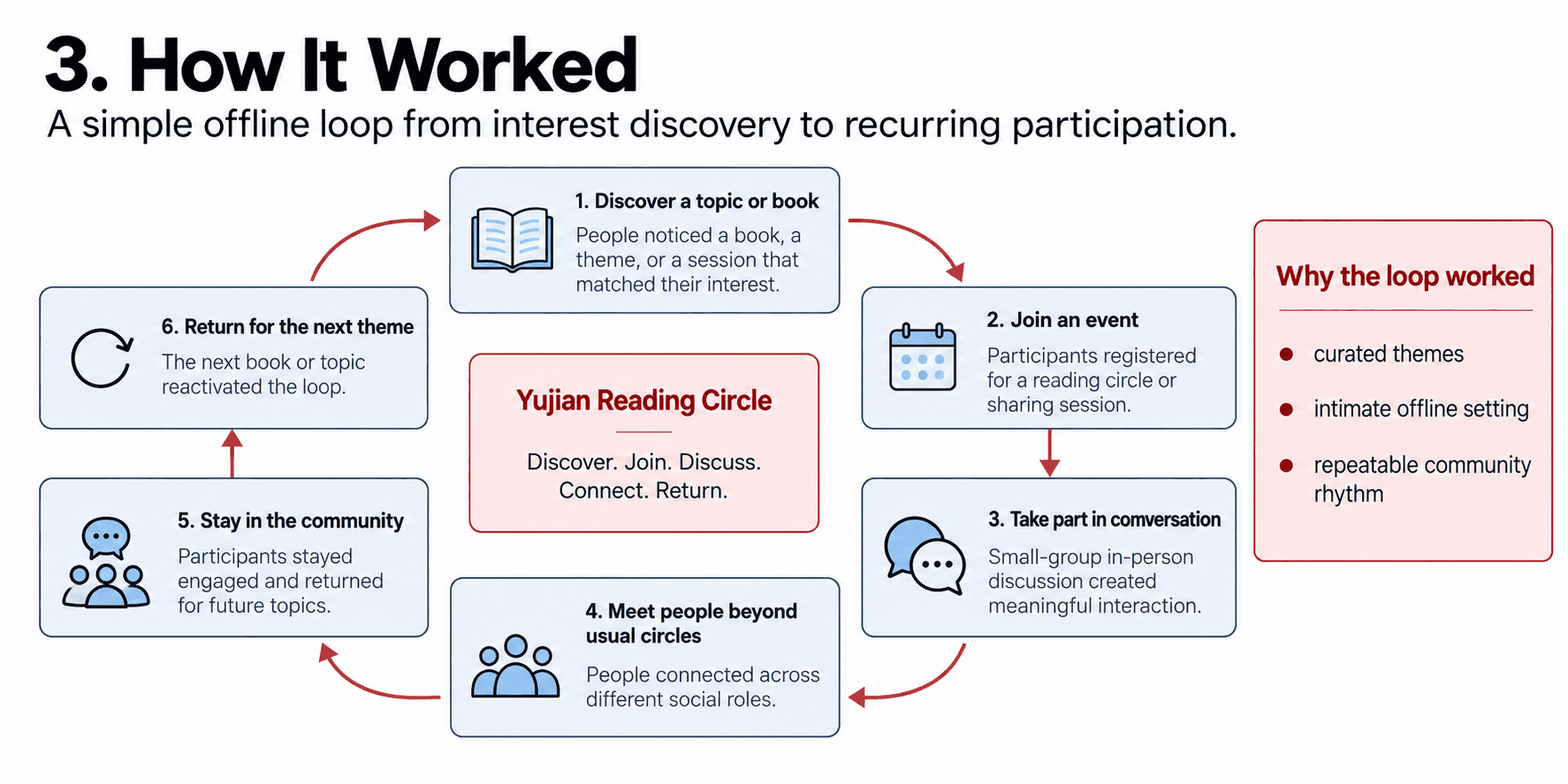
How recurring participation worked
People discovered a book or theme, registered for a reading circle or sharing session, joined a small in-person discussion, met people beyond their usual circles and returned when a new topic reactivated the loop. Curated themes, an intimate setting and a repeatable rhythm made the format coherent across different subjects.
Designing and operating the experience end to end
The work covered brand concept and positioning, theme selection, event programming, guest and speaker coordination, posters and copy, venue and atmosphere design, registration, on-site hosting, moderation, ongoing community maintenance and the website. The project was therefore both a community initiative and a service-design problem: every touchpoint had to reinforce the same reason for gathering.
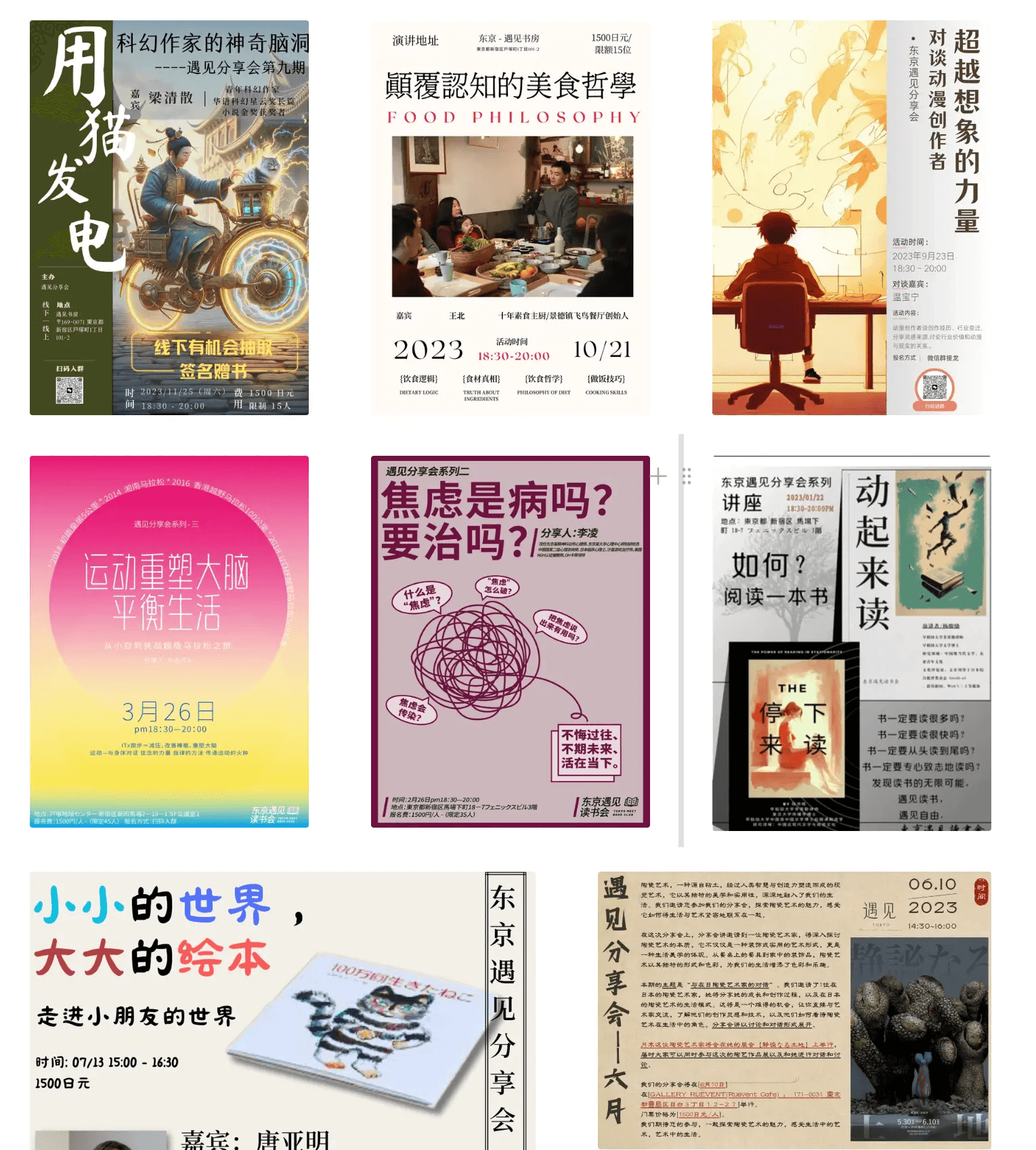
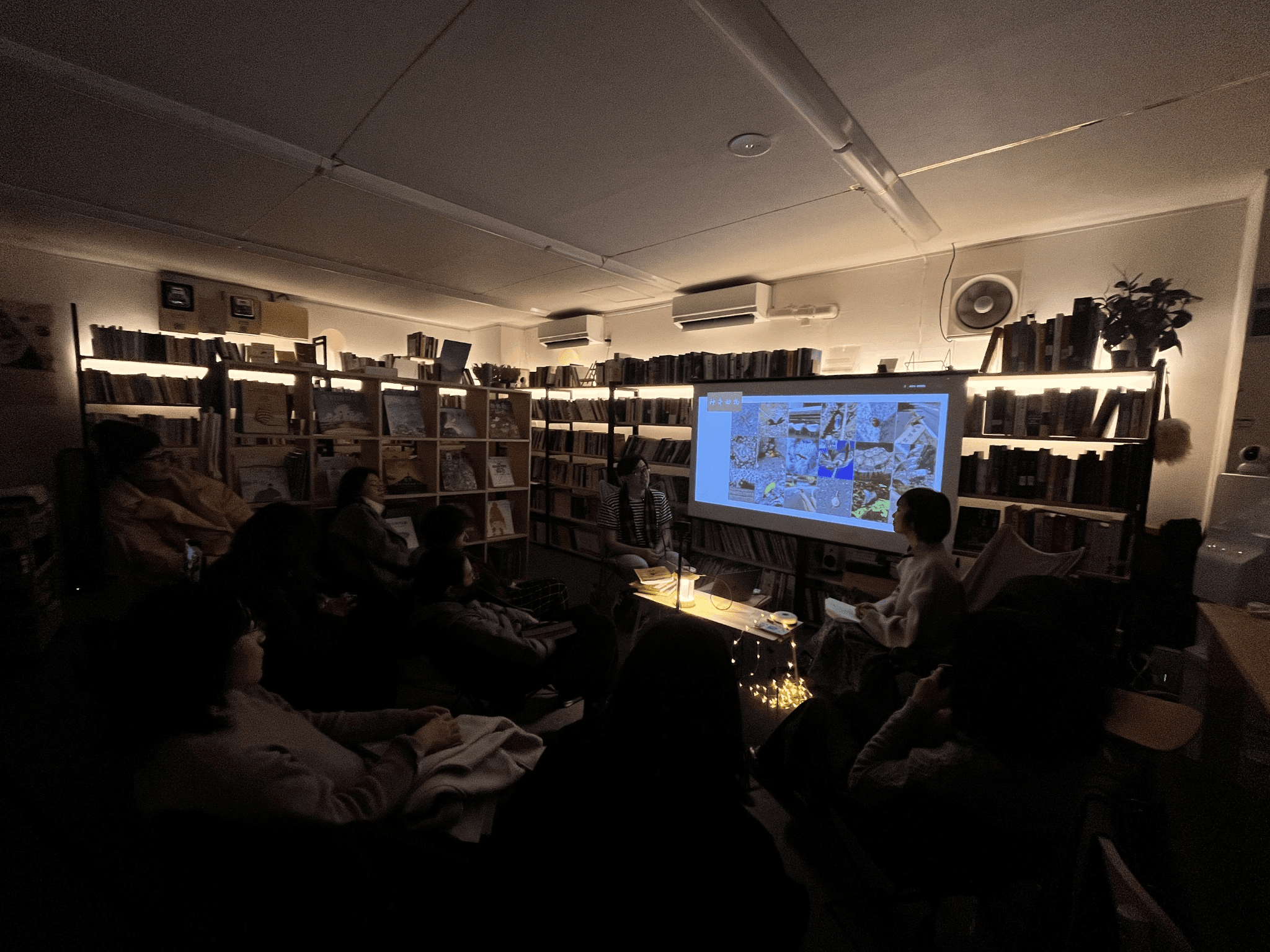
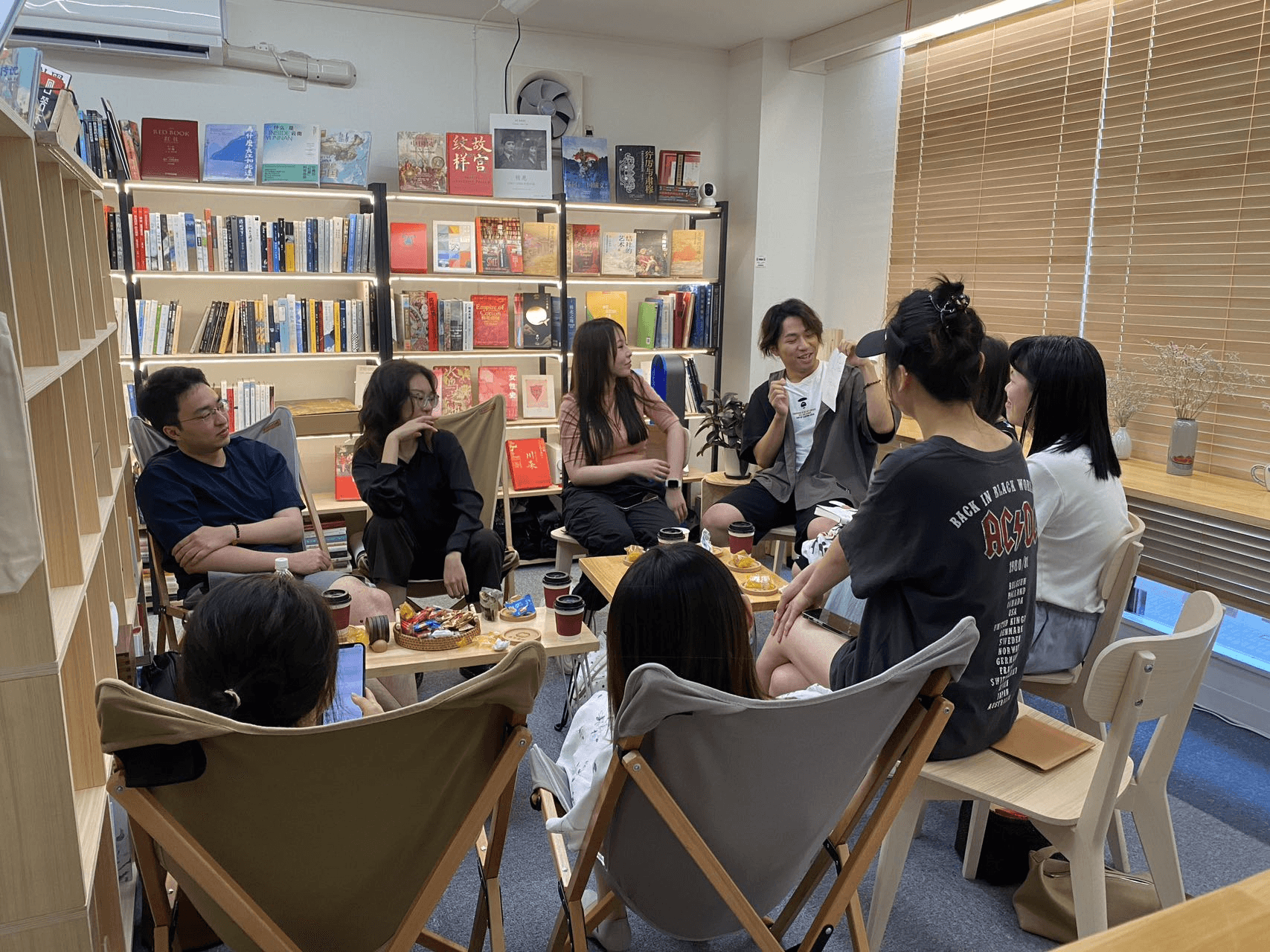
From a reading circle to a broader community identity
From 2022 through 2024, the programme expanded from reading sessions into conversations about creativity, psychology, food, comics, movement and everyday life. A later, wider Chinese social space in Tokyo emerged from this trajectory, but that stage was initiated by another co-founder and was beyond my direct involvement. My contribution was concentrated on the earlier concept, brand, programming logic and recurring community experience.
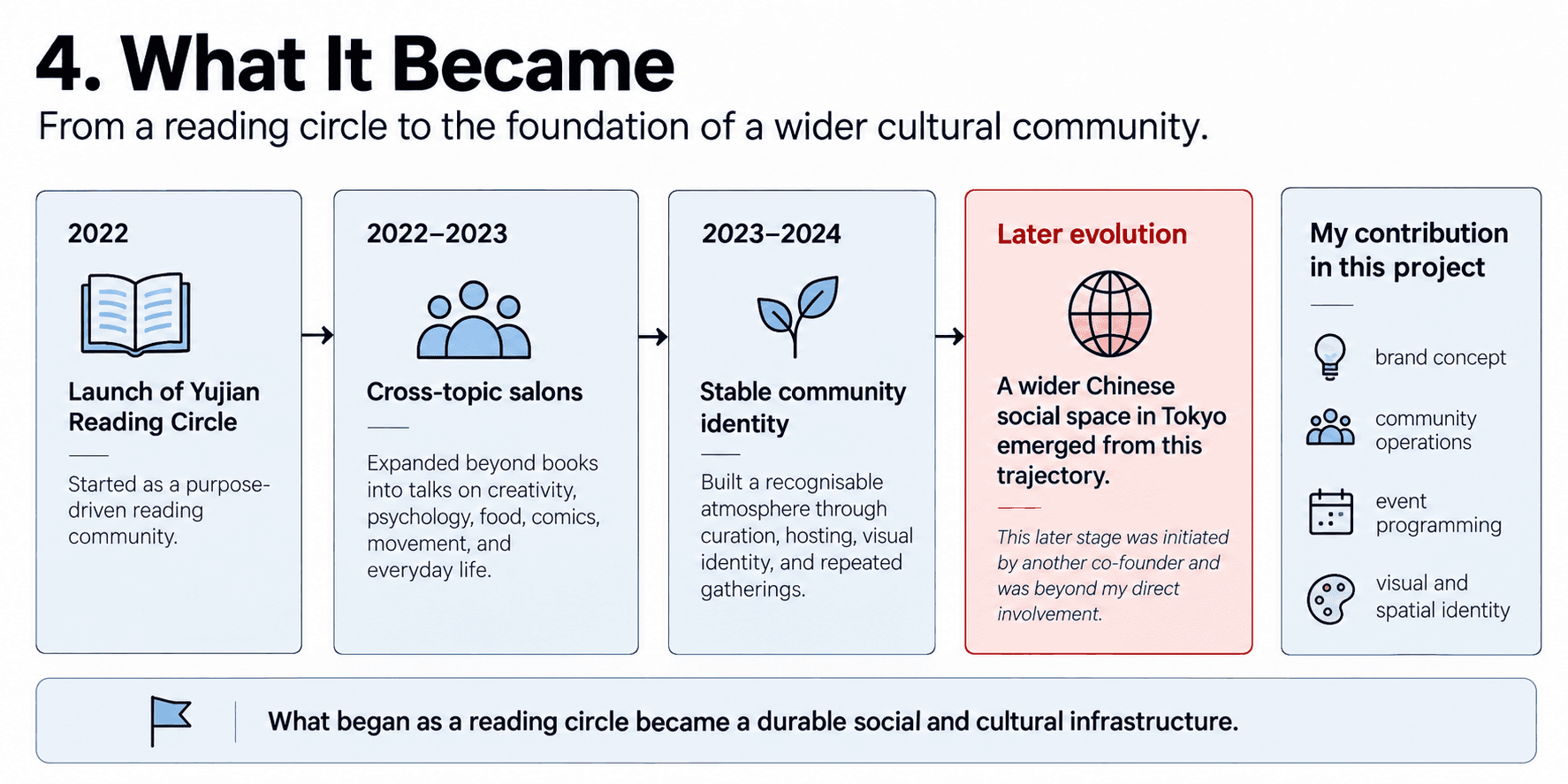
What this case demonstrates
This case demonstrates community concept development, programme design, brand building and sustained offline operations. It does not assign later community growth to work outside the period of direct involvement, and it does not use unverified attendance or session counts as evidence.